
Rates Surge 22%: Global Logistics Hits Structural Pain

Updated: Jul 23
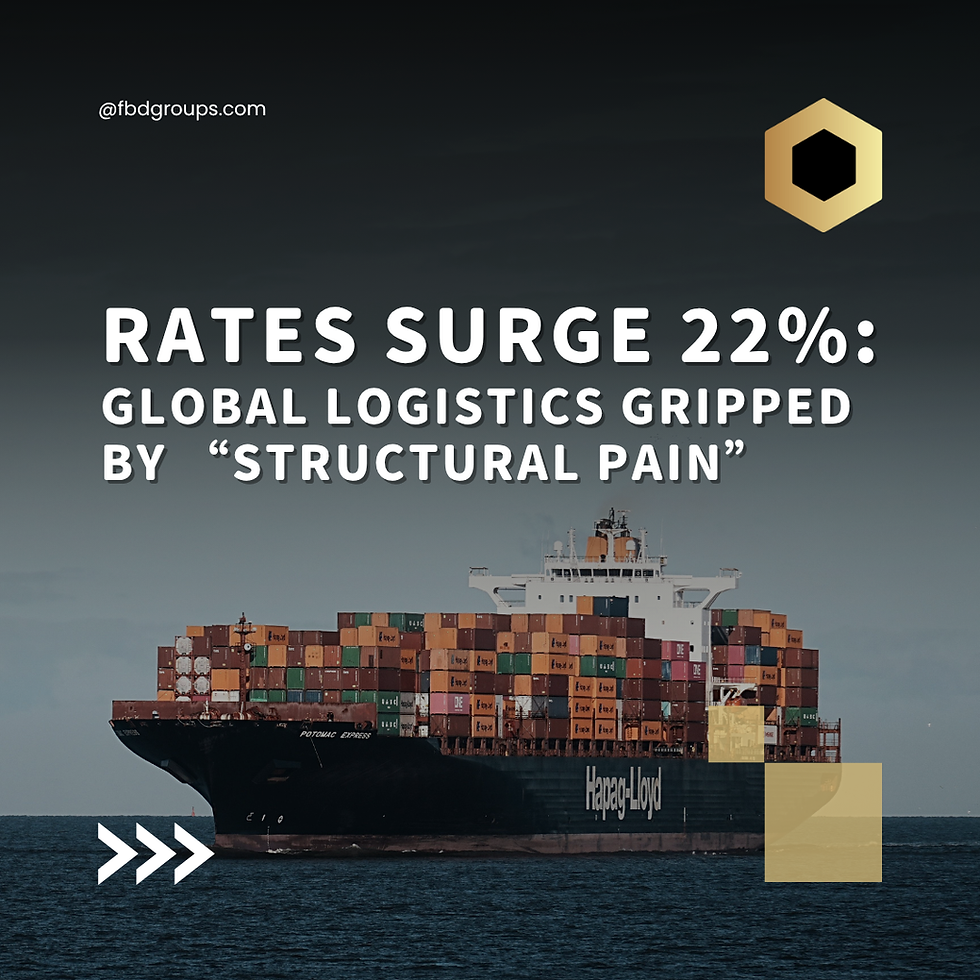
Since the escalation of Middle East tensions, global transpacific spot rates have surged by double digits in just one month. Data from Xeneta as of April 23, 2026, indicates that spot rates from Asia to the US West Coast jumped 22%, while rates to the US East Coast increased by 19%. Analyst Peter Sand notes that even the North Europe-to-US East Coast route—bypassing Asian hubs entirely—saw rates skyrocket 46% month-over-month. Carriers are now forced to restructure their service networks without warning, including rerouting around the Cape of Good Hope. This operational shift has added 10 to 14 days to transit times, soaking up vessel capacity originally expected to stabilize by 2026 and driving up operational costs.
Malacca Strait Under Pressure: Traffic Overload Threatens Global Chokepoint
As geopolitical conflicts force a global logistics rerouting, the Strait of Malacca—a vital artery for over 20% of maritime trade—is grappling with a severe congestion crisis. Vessel traffic through the strait reached 102,500 in 2025, up from 94,300 the previous year. During the first half of 2025, daily oil throughput reached 23.2 million barrels, surpassing the Strait of Hormuz’s 20.9 million. With Hormuz effectively closed to container traffic, the Malacca Strait has become a fragile necessity. Its hyper-dense traffic significantly elevates the risk of collisions and groundings.
Energy Realignment Spirals Panama Canal Transit Costs
Meanwhile, the blockade of the Strait of Hormuz disrupted crude oil supply chains, forcing Asian nations to source alternatives from the U.S. This pivot has funneled immense pressure to the Panama Canal. Forced rerouting has diverted vessels to U.S. ports for loading, triggering a spike in canal demand. This imbalance has not only sent auction prices to historic highs but has also turned the canal into a costly structural bottleneck, illustrating the cascading price of a forced global logistics overhaul.
Structural Spikes: US Domestic LTL Costs Feel the Overflow
Logistical cost pressures are extending through the US domestic transport network, exhibiting a notable trend of structural increase. Data from Freight Waves SONAR, the leading high-frequency freight market intelligence and forecasting platform, indicates that Less-Than-Truckload (LTL) market pricing has rebounded with a 7% year-over-year increase in March. This is no short-term blip; it is a structural shift. As the truckload (FTL) market tightens, shippers are using the LTL network as a “pressure relief valve,”, breaking down larger shipments to secure space and overdubbing demand.
Leading national LTL carriers are now prioritizing margins over volume, making these rates “sticky” and resistant to future market corrections. Furthermore, port congestion resulting from maritime delays has led to reduced distribution efficiency, placing shippers under a double squeeze of demurrage fees and inventory imbalances. Under these cumulative pressures, the logistics network has shifted from an earlier focus on efficiency to a current state of structural cost spillover.



Comments